
Business Operations & Growth Leader | AI-Enabled Operations | Strategy, Systems, People & Business Development

I build the systems your business is quietly holding together with tape.

25+ years across business operations, revenue, and growth for founder-led businesses: high-ticket sales teams, highly regulated industries, group practices, coaches and training providers, startups. I find the five things being held by a person instead of a system, then build what's needed next, using AI where it earns its place and my own judgment everywhere else.

Proof, not adjectives
8 → 24
Clinicians grown in two years, and they stayed
<1%
Monthly inventory discrepancy across ~1,700 SKUs, METRC compliant
35%
Revenue growth in a single year
25+
Years across production, operations, strategy, and revenue generation
EN / ES
Built and delivered bilingually, always
What I actually do

The five, in order.

Most of what slows a growing business down isn't a strategy problem. It's five things that are being held by a person instead of a system. Here's what they almost always are:

1Knowledge. The steps only one person actually knows, and that stall the week they're on vacation.
2Handoffs. What happens in the gap between two people, where things quietly go missing.
3Ownership. Who's actually holding something when it goes quiet, and whether anyone would notice if they dropped it.
4The standard. What "done well" means here, so it doesn't change depending on who did it.
5Confidence. What all of this adds up to: people doing their job well without guessing, and actually feeling good at it.

Most of this isn't written down anywhere. It's taped together in someone's head, and half the time that someone is the founder, too close to the business to see it from the outside.

I usually get brought in when a company has momentum, complexity, or a really good idea, and needs someone who can turn it into something people can actually execute. I'm particularly good at problems that don't arrive with instructions.

And I use AI the way a good hire uses their first ninety days: fast research, faster documentation, a working prototype you can react to instead of a deck you have to imagine. What used to take a team three weeks now takes me days. Not because I skip the thinking. Because I skip the retyping.

AI + Operations

The question I ask on every engagement

What can we stop doing manually, and what's possible now that wasn't practical before?

The same pattern shows up in different coats. A high-ticket sales team loses deals to a follow-up that never happens. A highly regulated company in cannabis, healthcare, or financial services runs on manual workarounds instead of compliant systems, and the paperwork trail becomes the real risk. A coach's enrollment process lives in three tools that don't talk to each other. An established company hits a ceiling because the parts that don't need a human never got automated. In every case, AI takes the repetitive half: the reminders, the intake, the status updates. That frees the people on the team to spend their time on the parts that actually require judgment.

A cluttered desk with two laptops and a black coffee cup, before the system gets built
An audit before anything gets built. The first step of every engagement.

At one group therapy practice, onboarding a new clinician used to live across six inboxes and nobody's calendar. I turned intake, referral, scheduling, insurance verification, and onboarding into one pipeline, and the team went from tracking dozens of clinicians in their heads to tracking them in a system. The judgment stayed human. The retyping didn't.

There's usually a second win hiding in there: the stack itself. Most teams pay for four or five platforms and use about a third of each one. Once the workflow is actually mapped, a lot of that can be rebuilt as automation shaped around how the team already works. Fewer tools, lower monthly spend, and nothing anyone has to invent a workaround for.

How I work

Five rules I don't break

Audit before I build anything. I won't quote a project before I understand what's actually going on.
Build it, then document it, so the system outlives me and your team doesn't need me forever.
Systems people actually use beat systems that look good in a deck.
Numbers I can defend, not numbers that flatter.
AI goes into the operation itself, not off to the side as a separate "innovation" project.
Get in touch

How can I help?

Five minutes of yours gets you a straight answer: what kind of support would actually help, and whether it's worth doing together. No pitch, no funnel. Just a real first conversation instead of warm-up questions.
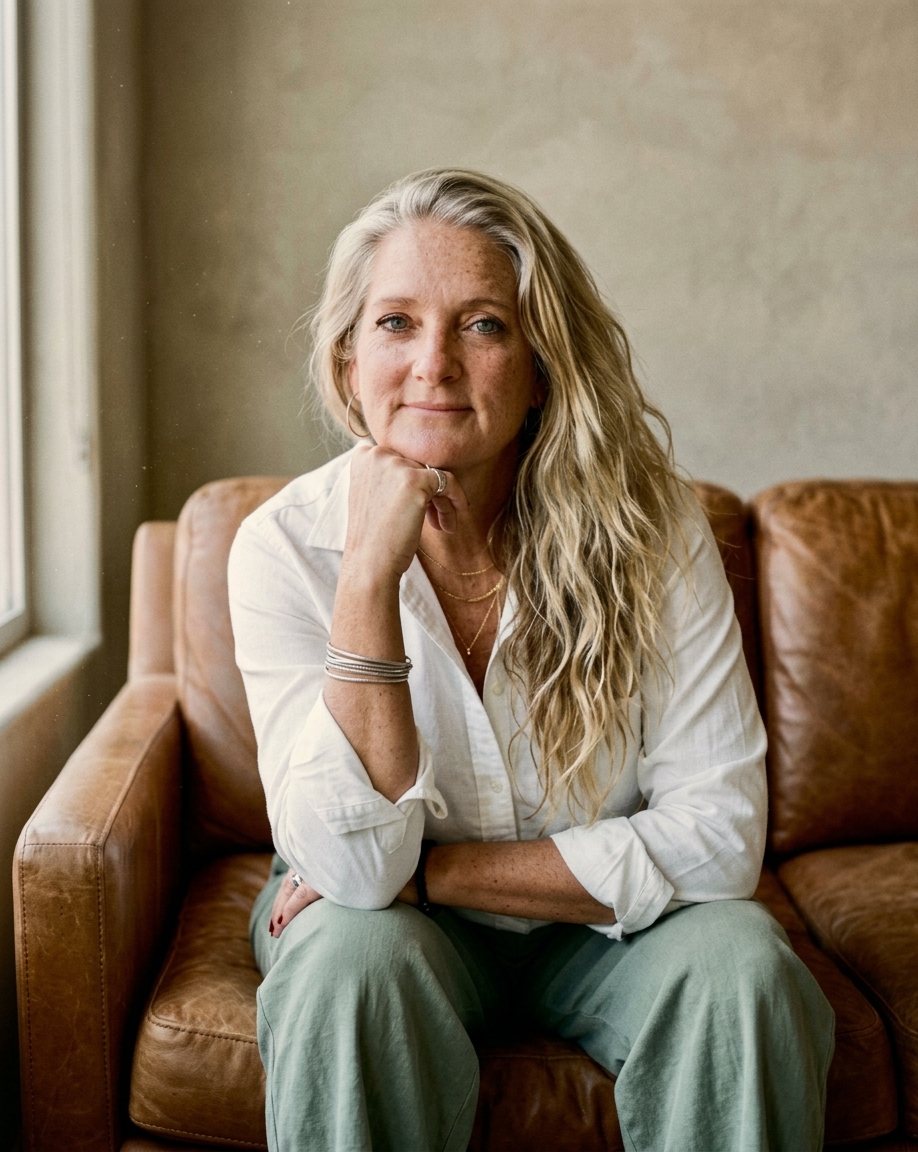
Amber Risucci

This goes straight to me, not a queue. The more specific you are here, the more useful my first reply will be.

Questions

Straight answers

What's the actual goal here?+
Systems that give you and your team the freedom to be human: with each other, with clients, with anyone who deals with your business. Everyone knows their role and what to do in it. Automation is in service of that. It's not the point of it.
How does working together actually start?+
An audit, together. I'm a fixer, so I'm quick to see where a business could run smoother, and I'm always honest about what I find. From there we decide together what's worth doing next. Sometimes that's a few hours of focused work on one specific thing, billed hourly. Sometimes it's a full scoped project. Either way, you're in every decision, not just the invoice.
Who do you actually work with?+
Any business that wants to run better: scaling companies, startups that are fully built but want AI automation, high-ticket sales teams, highly regulated industries, coaches and training providers. Group practices are where I started and one industry I still support, not the whole story.
What if I'm not sure what I need?+
Most people aren't, at first. That's what the audit is for. Tell me what's on your plate, and we'll figure out together where support would help most.
What happens after I reach out?+
I read every message myself and reply within two business days with an honest read on whether I can help and what that would look like.
Can we work in Spanish?+
Yes. Fully bilingual, start to finish.
Are you open to full-time roles, not just consulting?+
Yes. The right fractional or full-time leadership role is on the table too. Say so when you reach out.